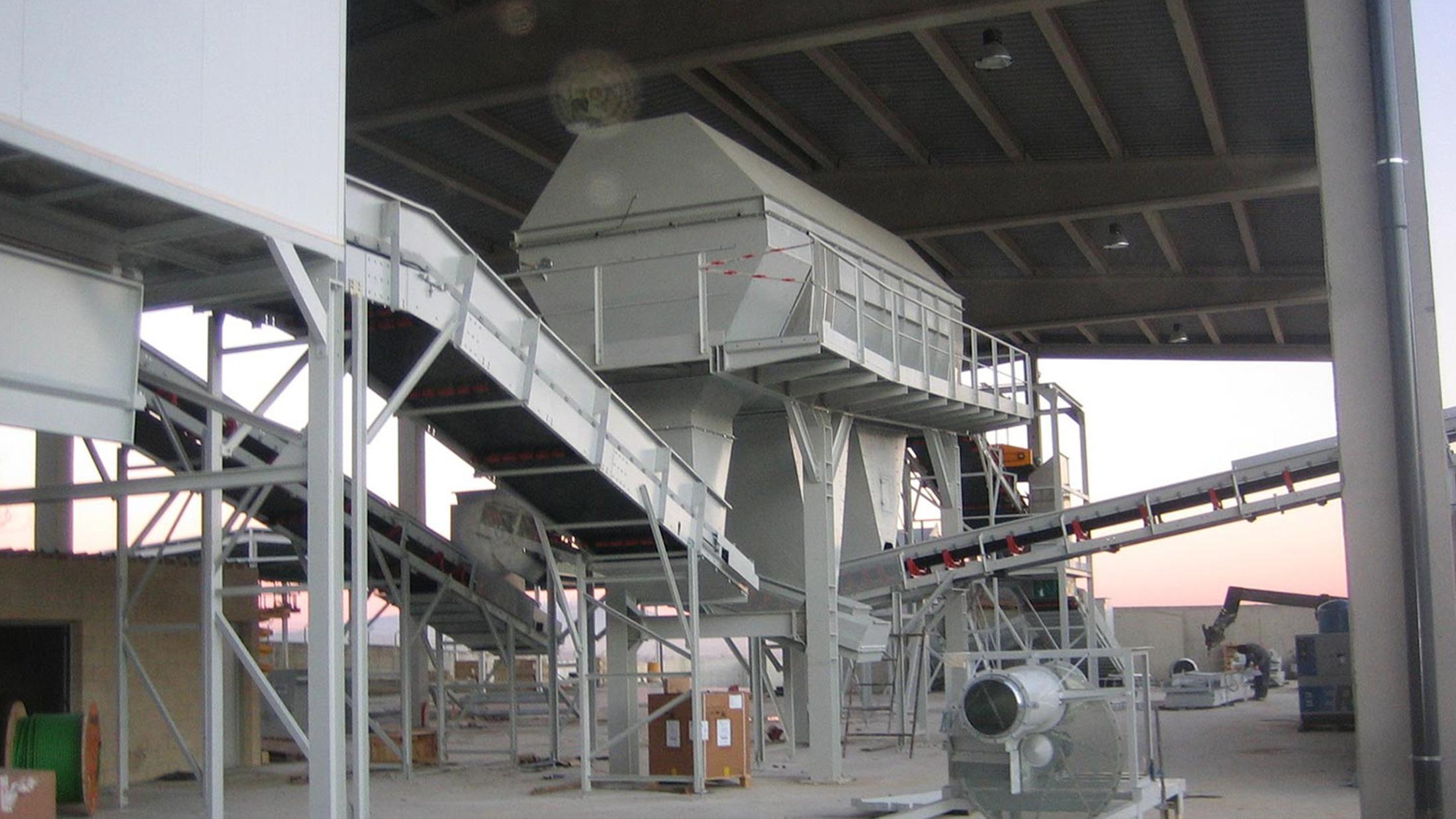
TR Trommel
Screening trommels are a fundamental component and the heart of waste treatment facilities, as the success of most subsequent mechanical pre-treatments depends on their separation efficiency. Designed to ensure precise, consistent particle size separation, fully adapted to the specific characteristics of each type of plant and material.
Screening adapted to treatment capacity, material to be processed, and desired particle sizes, among others.
High Efficiency and Flexibility
Capacity to process large volumes of material with configuration options in single drum or double trommel (to separate multiple fractions simultaneously).
Robustness and Long Service Life
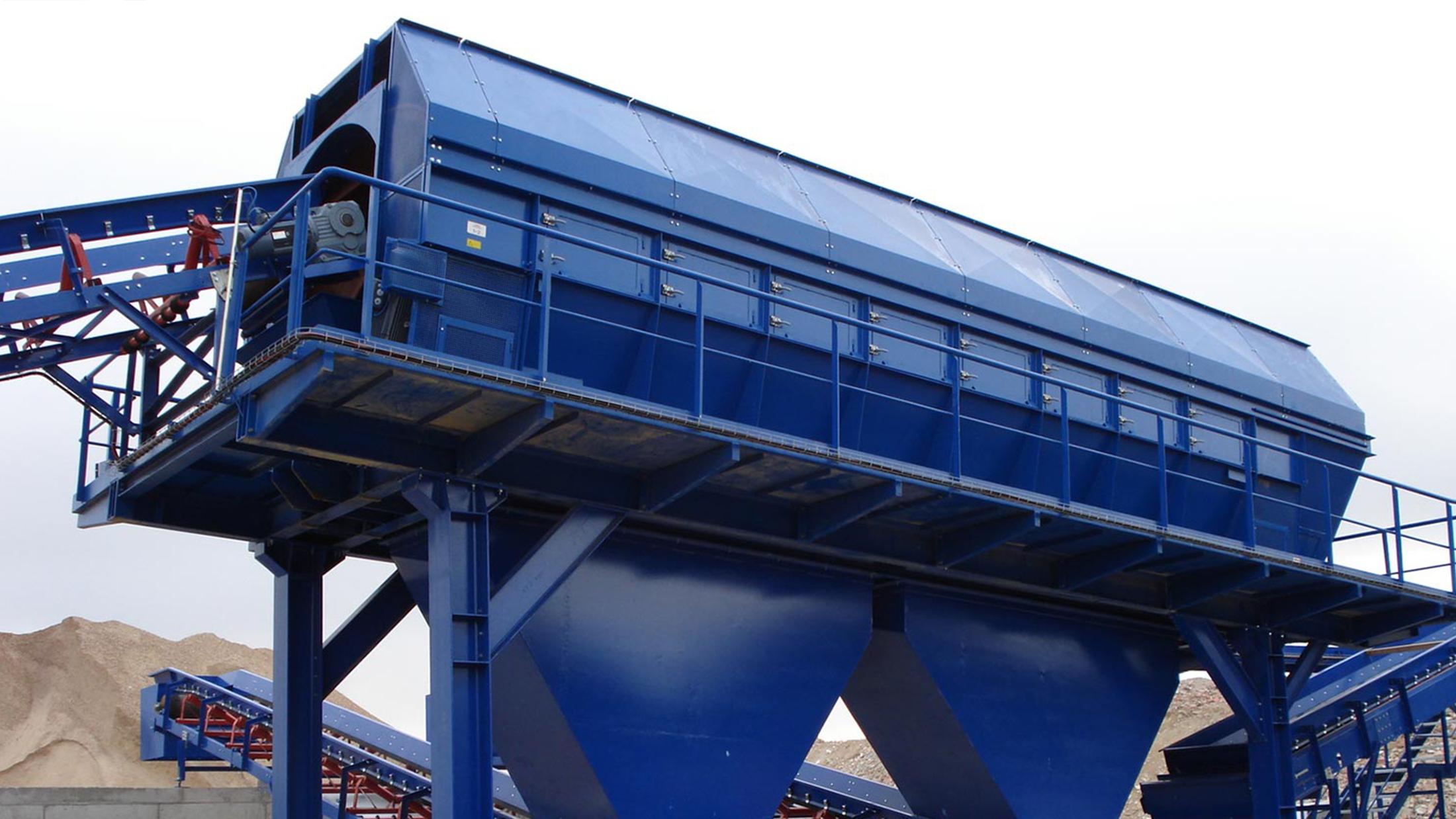
Heavy structure without deformations and interchangeable screens with plate thicknesses from 6 mm to 15 mm, depending on material aggressiveness.
Low Operating Cost
Reduced energy consumption thanks to efficient direct transmissions and minimized maintenance.
Optimization Elements
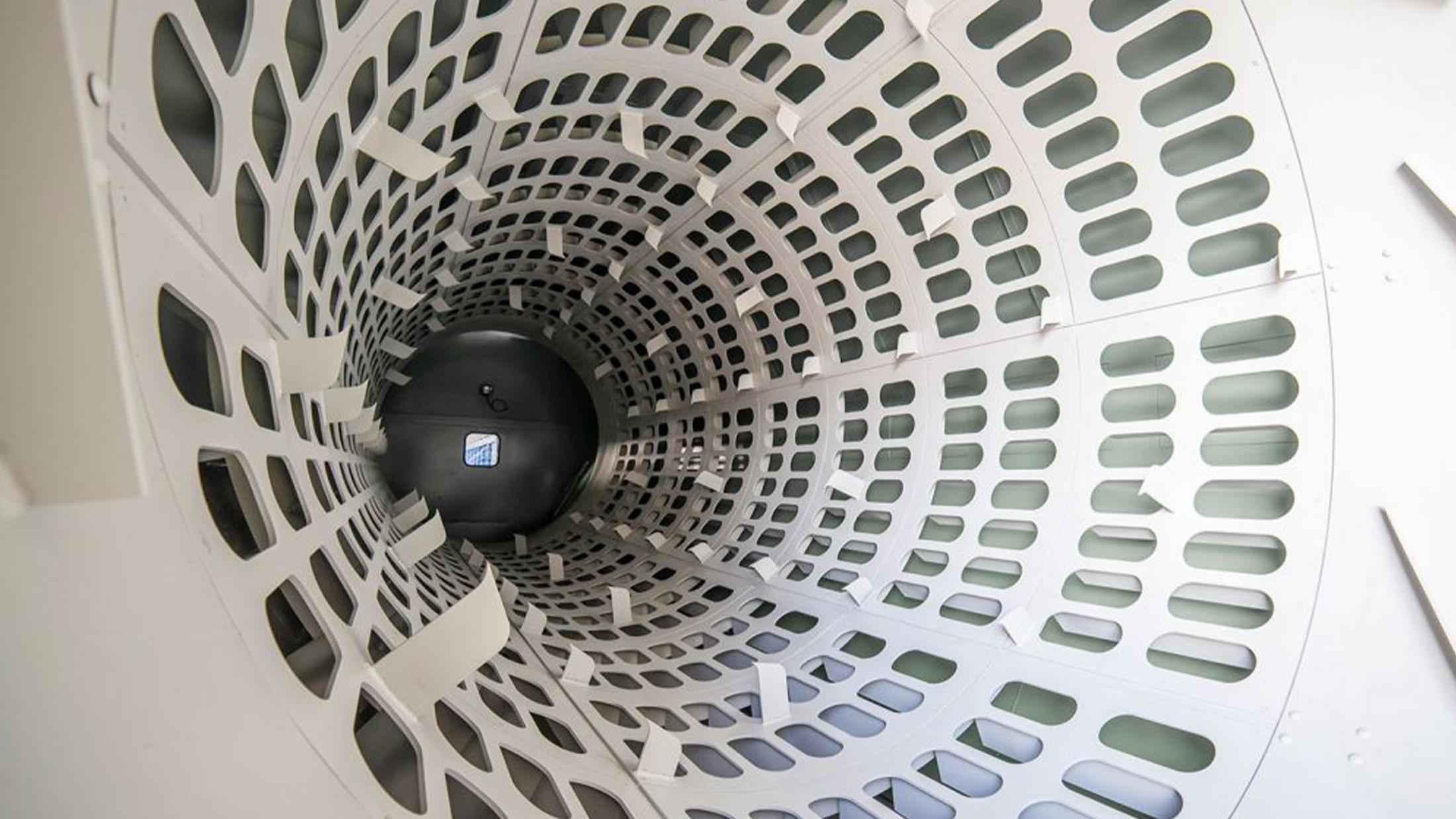
Possibility of integrating anti-wire systems (anti-clogging bars that prevent tangles and excessive cleaning) and bag-breaking spikes inside to open garbage bags during the same process.
Comprehensive Safety and Accessibility
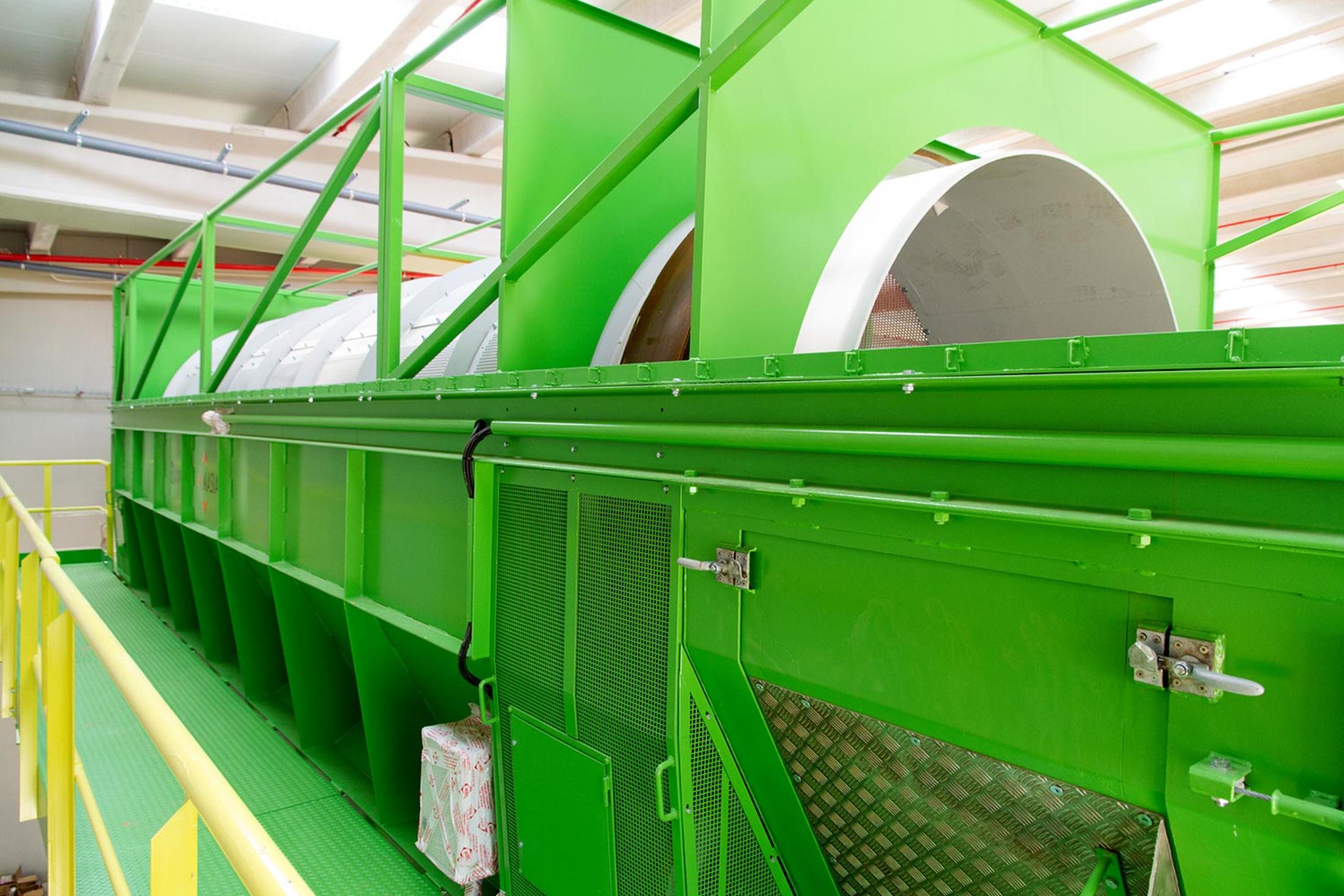
All access points are equipped with magnetic switches. They incorporate perimeter emergency stops (pull cable), drum immobilization brake, interior LED lights, and doors that convert into walkways to facilitate ergonomic maintenance.
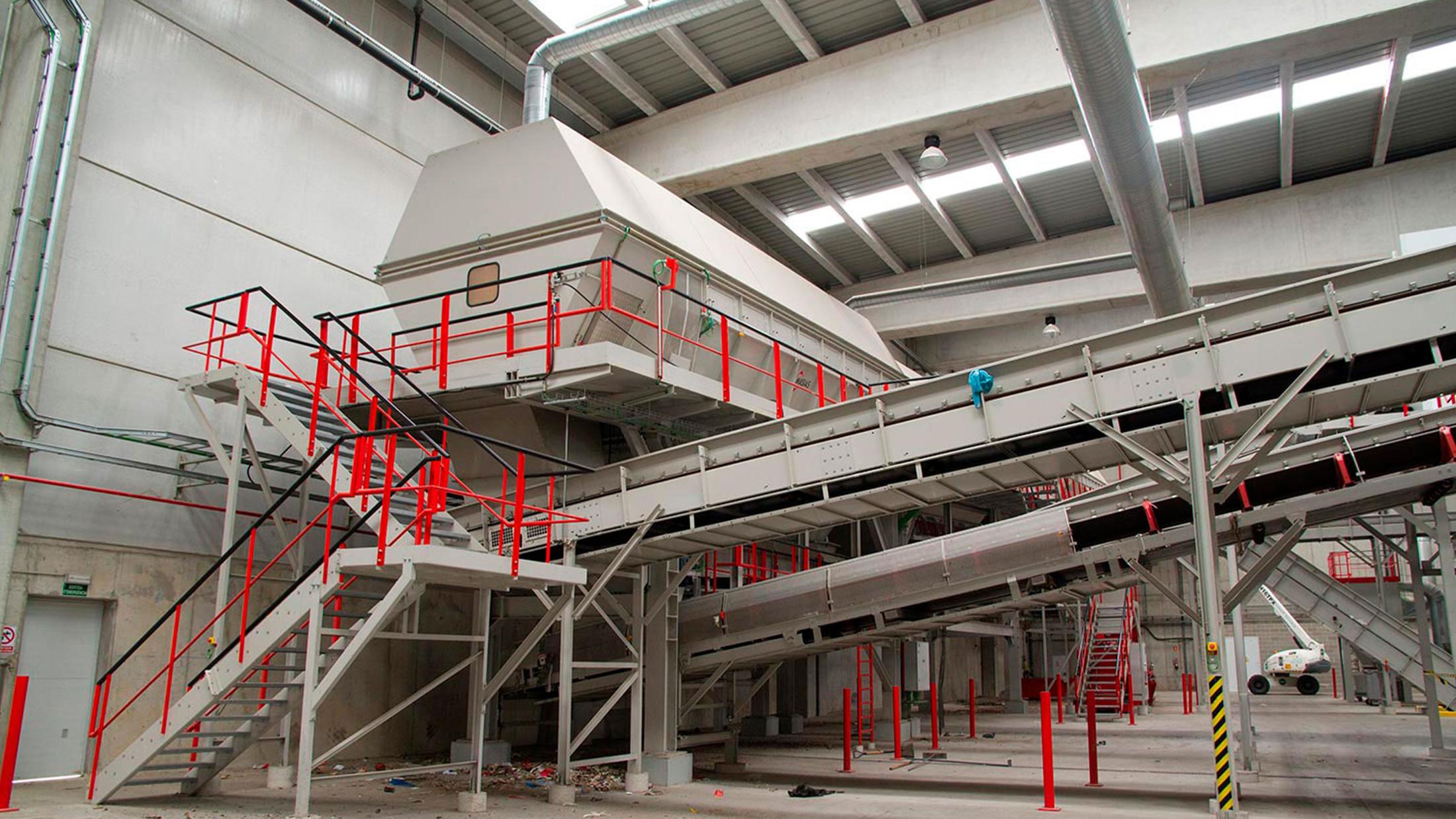
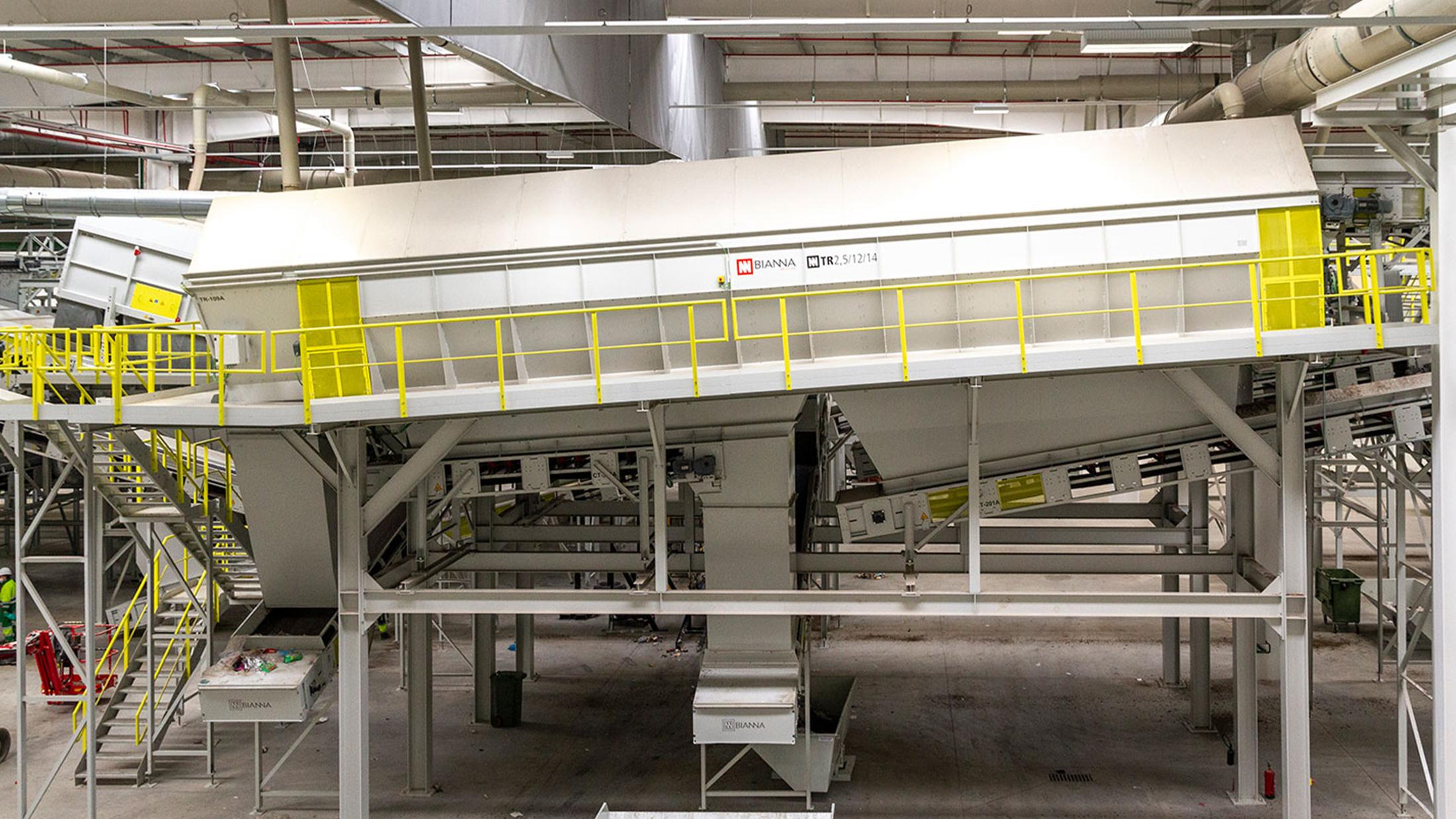
It is a cylindrical rotary screen designed to classify waste by size. Bianna manufactures different versions according to the application: stationary trommels for MSW and packaging, reinforced trommels for construction and demolition waste (C), and specific trommels for compost refining. It is characterized by its robustness, durability, and the use of interchangeable screens.
Main Applications within a Plant
Bianna's TR Trommel is the first step toward efficient recovery
- Primary Classification: Located at the head of the installation to separate the fraction by sizes, determining the subsequent route (fines, medium size for optical recoverables, and bulky/coarse materials).
- Organic Recovery: It is the essential equipment in MSW plants for screening and isolating organic matter from other fractions.
- Compost Refining: They act as the first step in refining lines to precisely separate clean compost from structuring materials.
- Equipment Protection: They remove bulky and heavy materials that could damage fine machinery downstream.

Renting Options
Discover Bianna Renting Services and access Bianna technology without initial investment.
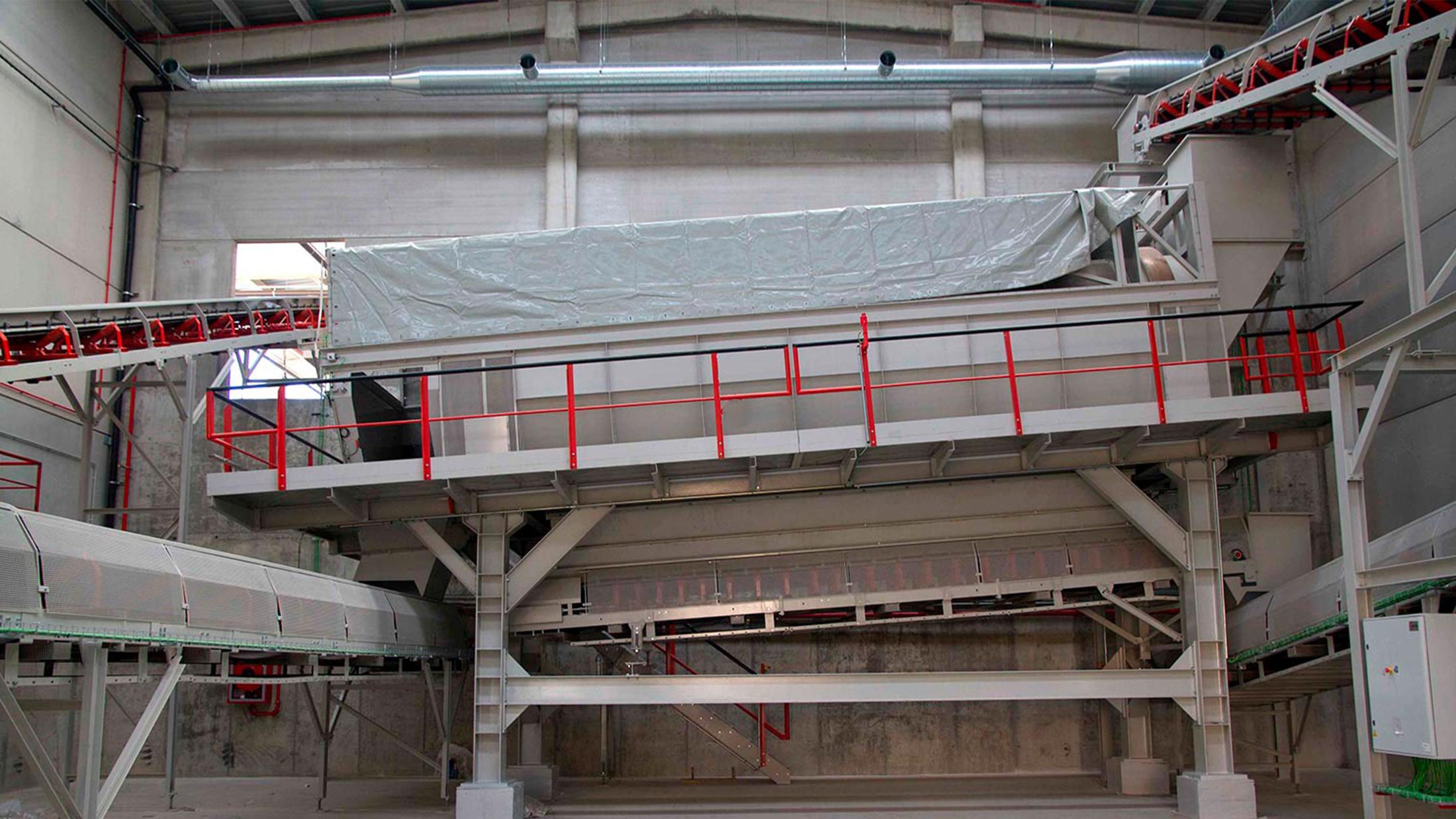
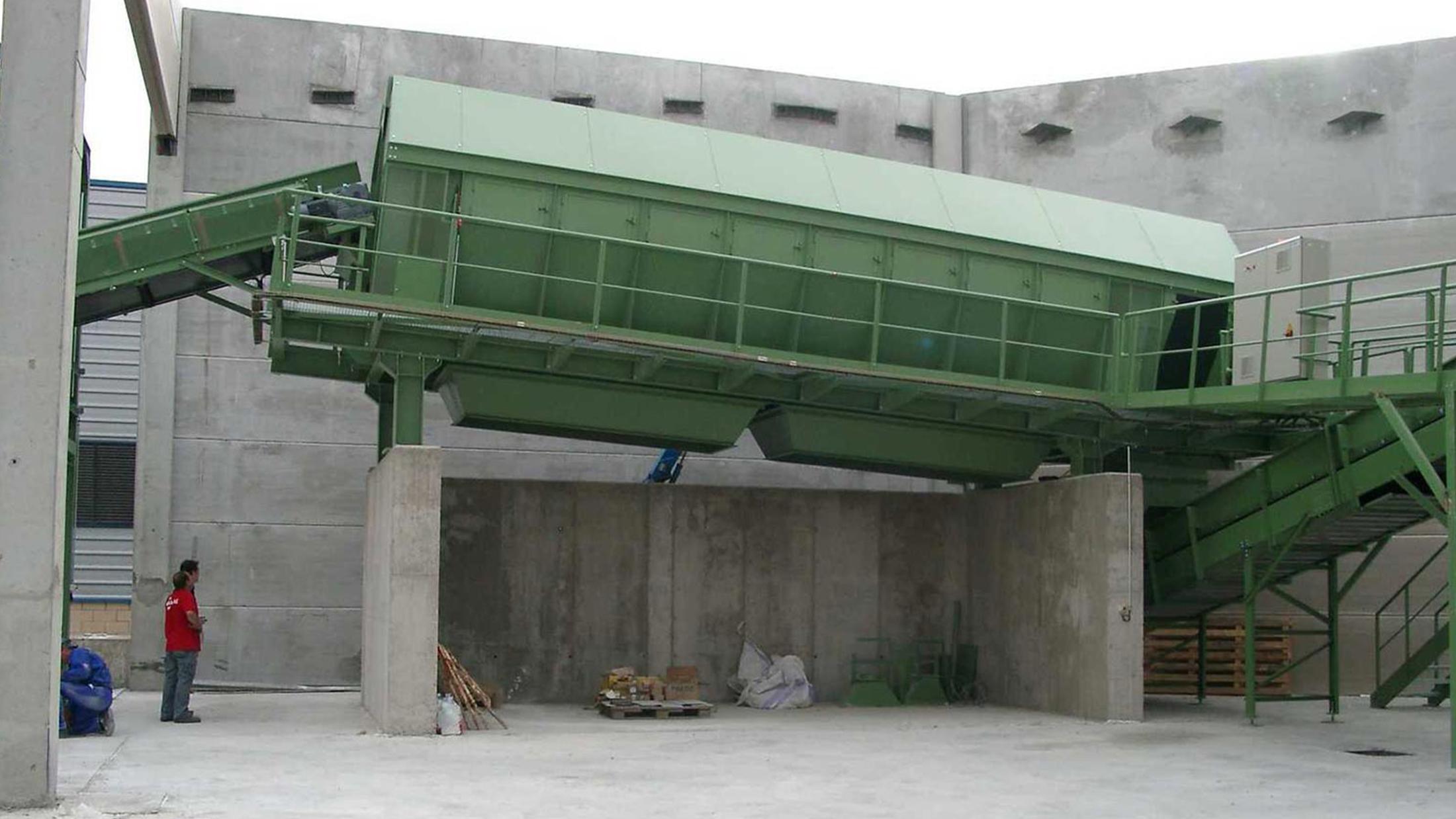
Request a financing studyTrommel in action

Aftersales Services
Maintenance, technical service and spare parts. Minimise downtime, maximise results.
Request informationTechnical specifications
Material infeed
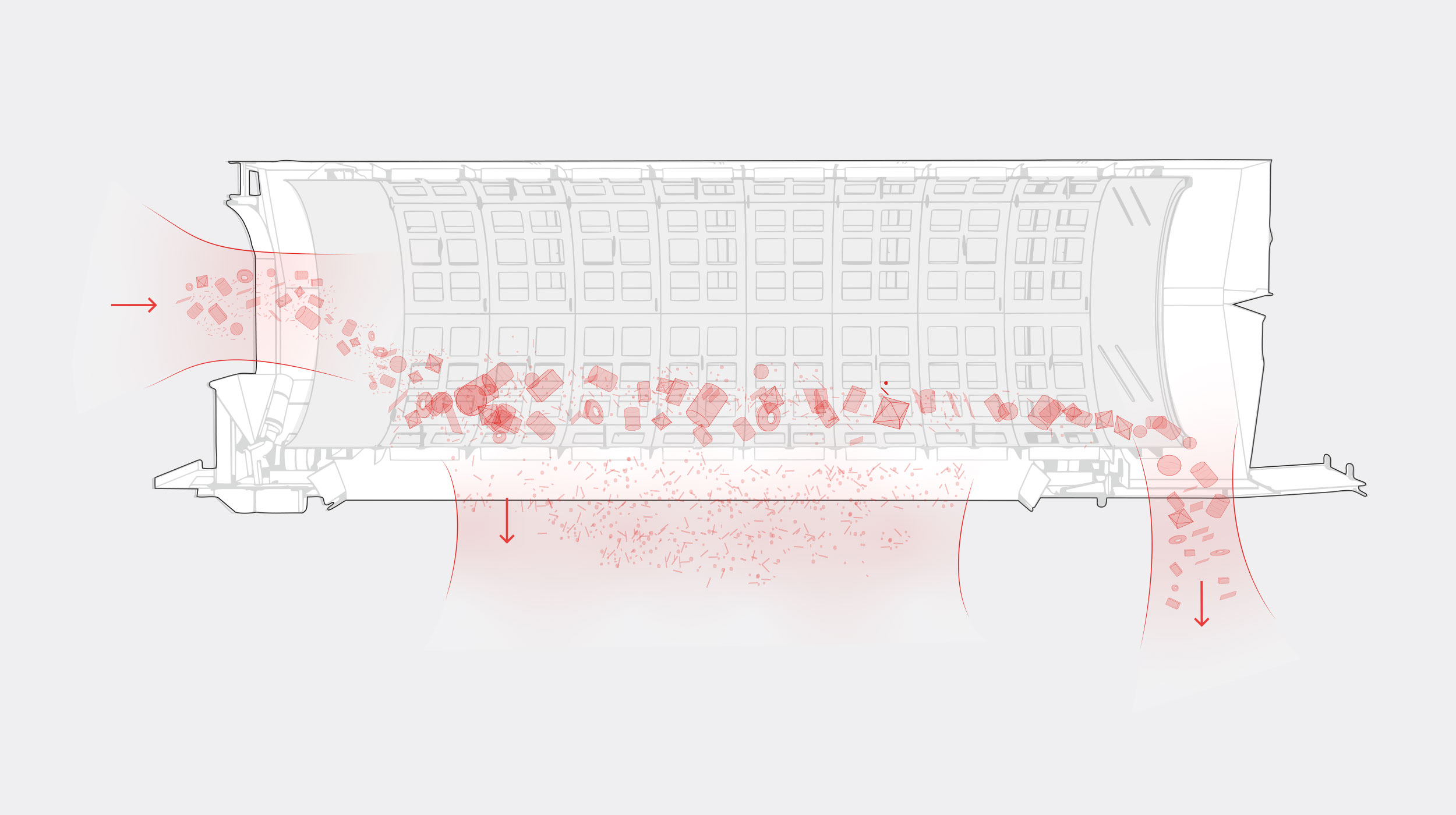
The waste enters through the upper hopper of the equipment, which enables the material to be fed into the screening drum.
Screening drum
Cylindrical drum inclined at 4°, which receives the material through the inlet hopper. The material moves towards the lower end due to the drum’s rotational movement and gravity.
Screening mesh
The meshes are screening elements that cover the trommel drum and, through openings of defined size and geometry, enable the separation of the material according to its particle size during the equipment’s rotation.
Fine material outlet
Material that passes through the openings in the trommel mesh and is discharged from the drum.
Coarse material outlet
End point where large-sized materials are discharged through the reject hopper.
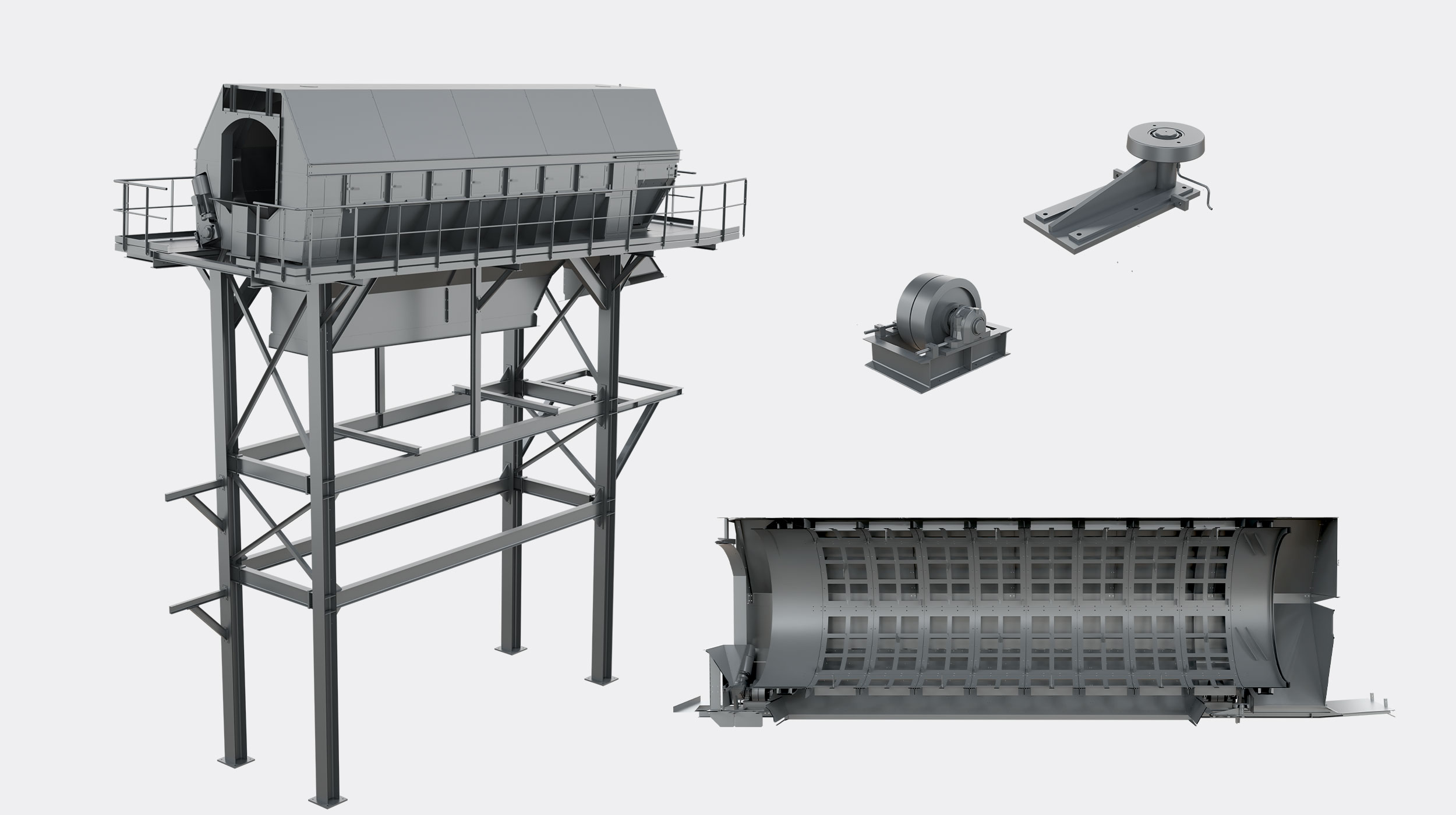
Features and components

Showroom and training
Bianna Greenways, to see our plants and equipment in real operation
Request a visitOperation
Rotary movement for precise classification
Material enters through the highest area of the rotating drum via a conveyor belt or hopper. Accelerator plates located at the entrance propel the waste into the interior to prevent jams. Due to the cylinder’s inclination and its slow rotary movement (typically around 12 rpm), the material tumbles and gradually advances toward the lower area.
During this journey, smaller particles pass through the screen holes, falling into hoppers or lower conveyors (frequently trough conveyors).
Larger material that could not be screened travels through the entire interior until it is discharged by overflow at the end of the drum.